La Reine de dessert
Hiver 09/10
"Dessert" is a course that typically comes at the end of a meal, usually consisting of sweet food but sometimes of a strongly-flavored one, such as some cheeses. The word comes from the Old French "desservir" means "to clear the table."
Before the rise of the middle class in the 19th-century, and the mechanization of the sugar industry, sweets were a privilege of the aristocracy, or a rare holiday treat. As sugar became cheaper and more readily available, the development and popularity of desserts spread accordingly.
Since I think that the most excellent desserts are found in France, and she has a very popular dessert which has various kind of flavors and has different colours, that is "Macaron". Sonia would like to present the culture of France in the past, so I think this dietetic culture should be an interesting topic, and I would like to according to the macaron's colour in my new collection.


Macarons are sandwich-like pastries made with two thin cookies and a cream or ganache between the cookies. In Paris, and particularly at the Versailles Court, members of the Dalloyau family, ancesters of those who founded in 1802 the gastronomy house wearing the same name, served macarons to the Kings, from 1682 until Louis XVI and Marie-Antoinette.
Adding jam, liquors, spices, the macarons shells will be put together two-by-two in the 1830s and, at the end of the 19th century, is created the "Parisian macaron", also called "Gerbet".
Thus, the macaron that is known today is the macaron called "Gerbet" that was born in the 1880s in the Belleville neighbourhood of Paris.
Adding jam, liquors, spices, the macarons shells will be put together two-by-two in the 1830s and, at the end of the 19th century, is created the "Parisian macaron", also called "Gerbet".
Thus, the macaron that is known today is the macaron called "Gerbet" that was born in the 1880s in the Belleville neighbourhood of Paris.
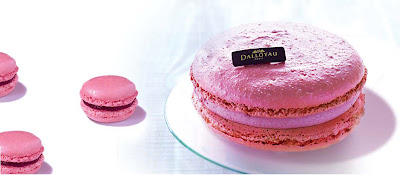
Many cookbooks provide macaron recipes, but the authentic Parisian macarons, with the multifarious flavors and colors, have continued to be in short supply, due to the difficulty in making them well. Today, there are but a few cities in which top quality macarons can be found.